Colors
Explore paint colors, finishes, and project size.
Compare sample exterior palettes, consider the finish for each surface, and explore an illustrative project estimate. Use these tools to organize your ideas, then confirm physical samples and project requirements before purchasing paint.
Tool 1 of 3
The right sheen for the surface
Sheen is how much light the finish throws back, and it decides whether a wall hides its flaws or shows them, and whether it wipes clean. Pick the surface. We say which one, why, and which ones we would talk you out of.
Interior walls
Eggshell
Eggshell is the middle: it wipes with a damp cloth, it does not glare, and it hides a normal wall. Halls with kids and dogs can go up to satin.
- Flat, avoid
- Matte, also fine
- Eggshell, recommended
- Satin
- Semi-gloss, avoid
- High gloss
our pick also fine avoid
Matte is also fine the walls have old patches and you want them to disappear.
- Product
- Premium interior acrylic, one product for walls; the good line is worth it in eggshell
- Coats
- Two coats rolled, cut lines brushed at ceiling and trim
Tool 2 of 3
Try a scheme on the house
Six schemes we have painted, named for what is what, on a house we drew. Pick one and the new colours roll across. Or pick your own three and see if the trim still reads from the street.
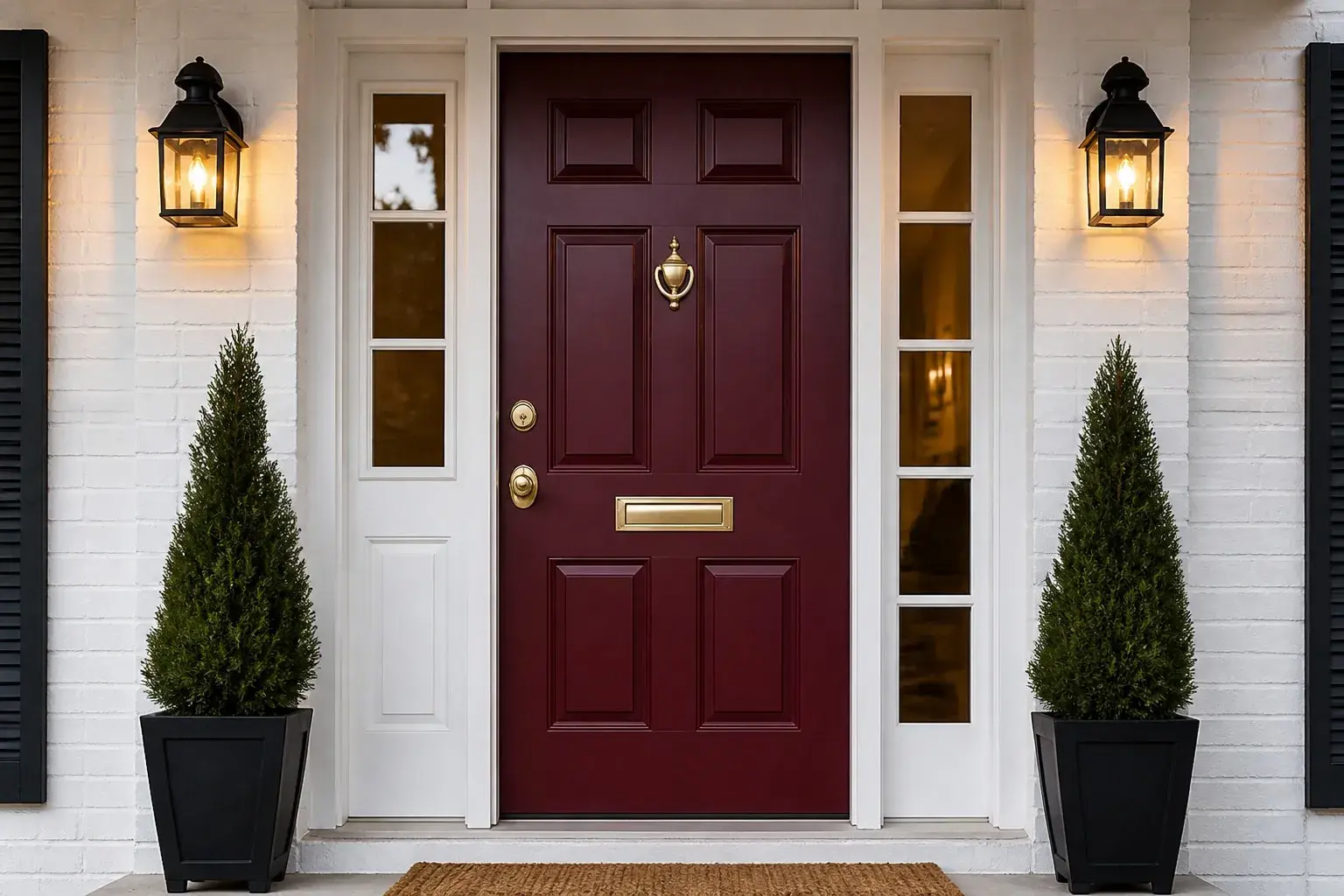
Sage body, cream trim, oxblood door
Body LRV about 24
- Body, trim, and door all read from the street. Good scheme.
Tool 3 of 3
Rooms or elevations to a number
Square feet of wall, the gallons two coats take, and a cost band. Doors and windows are taken out at fifteen percent, which is about right for most houses. A range for a conversation; the walk is where it becomes an estimate.
How we pick colour with you
Confirm the color in your own light.
- Samples on the wall, not chips in the store. Two feet square, in the real product and sheen, on the side of the house or the wall you look at most.
- Three days with them. Morning light, evening light, a cloudy afternoon. Colour changes more between those than between any two chips.
- The number on the back of the chip. LRV is how much light a colour reflects, 0 to 100. Under 15 on a body and the siding runs hot in the sun; over 70 and the shady side shows every streak.
- Trim first, then body, then door. The trim is the line the eye reads, and the door is where the colour goes.
Discuss your painting project
Share the scope, your priorities, and the timing you have in mind. This inquiry form is part of the 3Fold Labs website demonstration.